
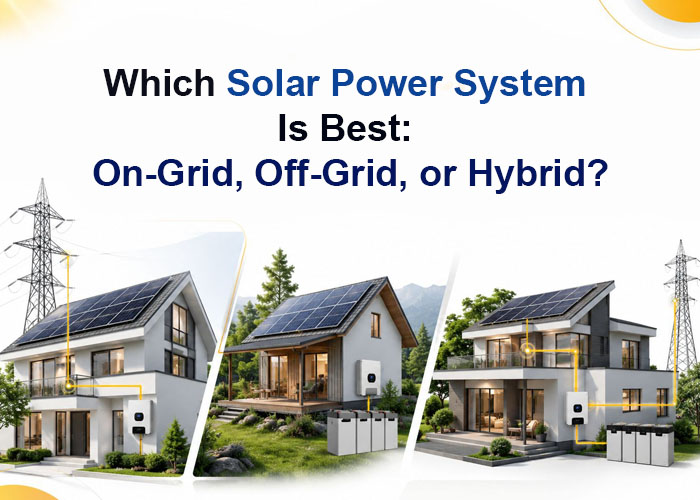
Which Solar Power System Is Best: On-Grid, Off-Grid, or Hybrid?
The selection of the appropriate solar power system will be based on your energy requirements, budget, and location. The three primary categories, namely on-grid, off-grid and hybrid, have different purposes. Knowing the way they operate can assist you in making a viable and economical choice.
What Is an On-Grid Solar System?
An on-grid solar system is connected to the local electricity grid. It produces power in the daytime and takes the surplus electricity back to the grid.
Key Benefits:
• Disadvantageous installation cost as compared to other systems.
• No need for batteries
• Capacity to take grid power at a time when there is low production of solar power.
Limitations:
• Fails to operate in case of power outages.
• Relies on the availability of the grid.
It is best suited to urban environments where the electricity supply is reliable and there is net metering.
What Is an Off-Grid Solar System?
An off-grid solar system is self-contained, not tied to any electrical grid. It depends on batteries to store its power that can be used during the night or during cloudy days.
Key Benefits:
• Complete energy independence
• Performs even in far-off locations.
• Reliable during outages
Limitations:
• Higher cost due to batteries
• Requires careful energy management
This alternative can be applicable where access to the grid is not available or not reliable.
What Is a Hybrid Solar System?
A hybrid solar system is a hybrid of an on-grid system and an off-grid system. It is linked to the grid as well as battery storage.
Key Benefits:
• Emergency power in the event of a power outage.
• Better energy control
• Reduced electricity bills
Limitations:
• Higher initial investment
• More complex setup
The hybrid systems are on the rise in regions where power interruptions and the increase in electricity prices are common.
Some of the most important factors to consider.
The following are some of the considerations that should be made in selecting a solar power system:
• Supply of electricity: Frequent outages can necessitate a hybrid or off-grid installation.
• Budget: On-grid systems are the least expensive, hybrid systems are more expensive and off-grid systems are the most costly.
• Energy consumption: Battery storage may be helpful in increasing consumption.
• Location: Remote locations may require off-grid solutions.
Which One Is Best?
One size does not fit all. When you have a consistent power supply, but you wish to save on bills, an on-grid solar system is a smart option. When you are living in a remote location, off-grid will be more feasible. A hybrid solar system has the most balanced mix of savings and backup.
Final Thoughts
The advantages of each solar setup differ, and the best option depends on your circumstances. Giving yourself some time to assess your energy needs will help you make a better decision in the long run. For those seeking reliable solar solutions and information on different system types, Solar India will provide sound advice to help you make informed decisions.