
Send Message Us
Recent Product
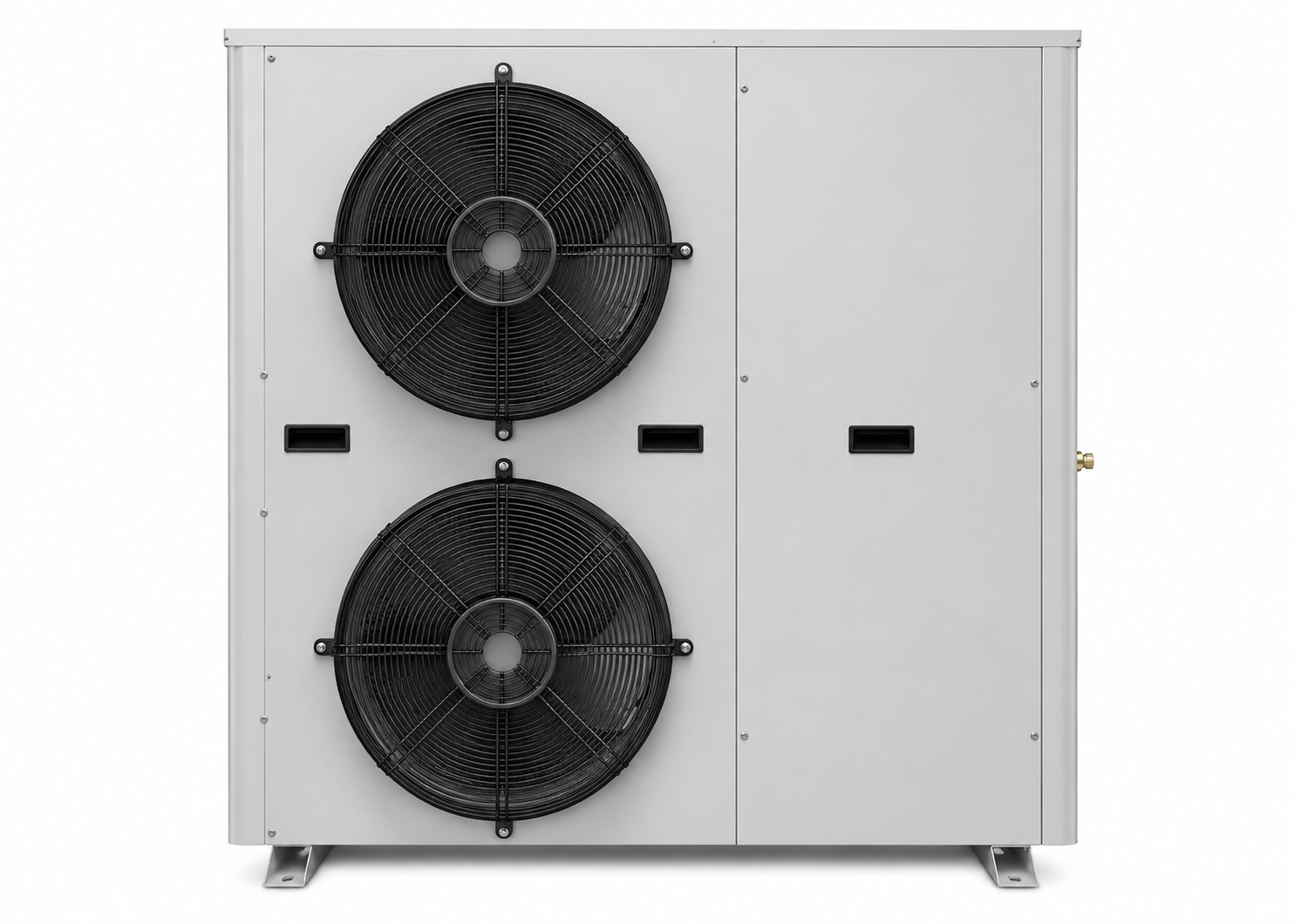
Heat Pump for Homes in Delhi NCR
Finding a practical way to manage both heating and cooling at home can be challenging, particularly with Delhi NCR’s hot summers and cold winters. Heat pumps for homes in Delhi offer a versatile solution by transferring heat rather than generating it directly. Depending on the system and operating conditions, a heat pump can provide cooling during warmer months and heating when temperatures fall. Solar India supplies residential heat pump solutions designed for homes, helping customers explore an alternative to using separate systems for different seasons.
What Is a Heat Pump for Home?
A heat pump is a heating and cooling system that transfers thermal energy from one location to another. Instead of relying only on conventional methods to generate heat, it uses a refrigeration cycle to move available heat.
For residential applications, this makes a heat pump useful for maintaining comfortable indoor temperatures across different seasons. During cooling operation, it can work on the principle of an air conditioner, while in heating operation, the cycle can be reversed to provide warmth.
For homeowners in Delhi NCR, where summer and winter conditions are quite different, this versatility can make a residential heat pump worth considering.
Solar India provides heat pump solutions for residential, commercial and other applications as part of its broader range of renewable-energy products.
How Does a Heat Pump Work?
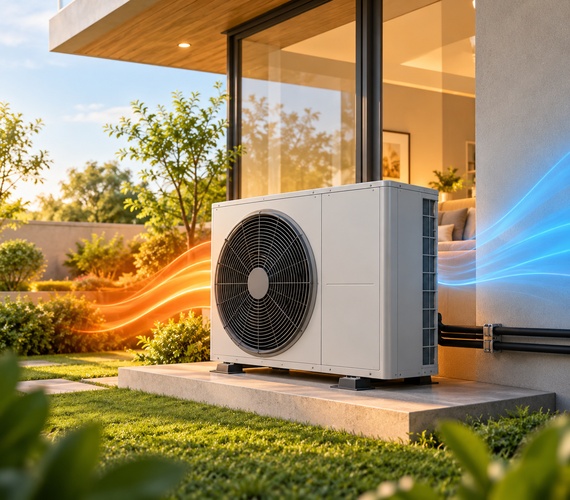
A heat pump moves heat instead of simply creating it. In an air-source system, heat is exchanged with the surrounding outdoor air.
The basic process involves:
- Heat absorption: The outdoor unit exchanges heat with the surrounding air.
- Refrigerant circulation: A refrigerant carries thermal energy through the system.
- Compression: The compressor raises the refrigerant’s pressure and temperature.
- Heat transfer: The system transfers heat to or from the indoor environment.
- Temperature control: The cycle continues according to the required heating or cooling operation.
This operating principle allows a heat pump to provide two functions from one system, depending on its configuration.
Heat Pump Air Conditioner for Homes
A heat pump air conditioner in Delhi NCR can provide cooling during warmer weather while also offering heating capability when configured for reverse-cycle operation. This can be useful for households that want one system capable of serving different seasonal requirements.
Instead of installing entirely separate equipment for cooling and heating, homeowners can consider a heat pump-based solution according to their property's layout, insulation, usage requirements and local climate.
The right capacity is important. A system that is too small may struggle to maintain the desired temperature, while an unnecessarily large unit can increase upfront costs and may not operate as efficiently as expected.
Heat Pump Heater for Winter Comfort
A heat pump heater transfers available thermal energy into the space that needs heating. This approach is particularly relevant for homeowners looking for an alternative to conventional heating arrangements.
Delhi NCR experiences noticeably cooler winters compared with summer conditions, making seasonal heating an important consideration for many households.
A residential heat pump can be assessed for:
- Bedrooms and living areas
- Independent houses
- Villas
- Apartments
- Larger residential properties
- Spaces requiring combined heating and cooling
- Residential hot-water applications, depending on the selected model
The suitability of a particular system depends on factors such as required heating capacity, ambient conditions, building design and installation requirements.
Key Features of Residential Heat Pumps
When selecting heat pumps for homes in Delhi, homeowners should look beyond the initial purchase price and consider how the system will fit into their property.
Heating and Cooling Capability
Suitable heat pump systems can provide heating and cooling functions, reducing the need to maintain separate seasonal equipment.
Air-Source Options
Solar India’s residential information highlights air-source heat pumps as a practical option for residential applications because they can be comparatively compact and do not require a large external water body.
Compact Residential Design
Air-source systems can be considered where available installation space is limited, subject to the specifications of the selected model.
Energy-Conscious Operation
Heat pumps transfer thermal energy rather than relying exclusively on direct heat generation. Actual energy consumption and savings depend on the model, operating conditions, usage pattern and installation.
Multiple Applications
Heat pump technology can be used for space-conditioning as well as specific applications such as residential hot-water systems. Solar India also lists residential sanitary heat pump models for hot-water requirements.
Benefits of Heat Pumps for Homes
Choosing the right heating and cooling system can influence comfort, operating costs and space utilisation. Some potential benefits of residential heat pumps include:
- One system for different seasons: Heating and cooling functionality can reduce dependence on separate equipment.
- Potential energy savings: Heat pumps transfer heat, which can make their energy performance attractive compared with some conventional heating methods.
- Space efficiency: A suitable heat pump arrangement can help reduce the need for multiple independent heating and cooling systems.
- Versatile applications: Residential systems can be considered for different property types and requirements.
- Lower reliance on conventional heating: Depending on the installation and electricity source, heat pumps can provide an alternative to certain conventional heating arrangements.
- Renewable-energy compatibility: Heat pumps can be considered alongside solar-energy systems where the technical and electrical requirements are suitable.
Solar India describes its heat pump range as suitable for residential, commercial and industrial applications and offers other solar-energy products that can complement energy-conscious building solutions.
Types of Heat Pumps
Different heat pump technologies use different heat sources.
Air Source Heat Pumps
Air-source heat pumps exchange heat with outdoor air. They are generally easier to consider for residential projects because they do not require extensive ground loops or a large water source.
For Delhi NCR homes, an air-source configuration may be considered where the site and required application are suitable.
Ground Source Heat Pumps
Ground-source systems exchange heat with the ground. They can offer an alternative where the property has sufficient space and the project permits the required installation work.
However, installation considerations can be more extensive than those associated with air-source systems.
Water Source Heat Pumps
Water-source systems exchange heat with a suitable water source. Their feasibility depends heavily on the availability and suitability of that water source.
Solar India’s residential heat-pump information identifies air-source systems as its recommended option for many residential applications, while noting the additional site requirements associated with ground- and water-source systems.
Why Choose Solar India for Heat Pumps?
Selecting the right heat pump supplier in Delhi NCR is as important as selecting the equipment itself. The system needs to match the property's requirements, available space and intended application.
Solar India Enterprises has a product portfolio covering heat pumps, solar panels, solar water heaters, solar lighting and solar inverters. The company states that it manufactures and supplies solar-energy products and provides solutions ranging from kW to MW projects, including AMC services.
When discussing your requirement with Solar India, you can evaluate:
- Residential application and property type
- Heating and cooling requirements
- Available installation area
- Required system capacity
- Hot-water requirements, where applicable
- Electrical requirements
- Integration with other energy systems
- Installation and maintenance considerations
This helps homeowners select a system based on actual requirements instead of choosing equipment only by its advertised capacity or price.
Heat Pump Installation Process
The installation process can vary according to the system and property. A typical residential project can follow these stages:
1. Requirement Assessment
The application, property size, heating/cooling requirement and expected usage are reviewed.
2. Site Evaluation
Available space, airflow, electrical arrangements and installation conditions are considered.
3. System Selection
The appropriate heat pump type and capacity are identified according to the project requirements.
4. Installation
The equipment and associated components are installed according to the system's technical requirements.
5. Testing and Commissioning
The system is checked to ensure that the installation and operating parameters are appropriate.
6. Usage Guidance
The homeowner receives relevant information about operation and routine care.
Who Can Use Heat Pumps for Homes?
Residential heat pumps can be considered for a wide range of properties, including:
- Apartments
- Independent houses
- Villas
- Farmhouses
- Premium residential properties
- New residential developments
- Homes requiring dedicated hot-water heating systems
The final selection should be based on the property's actual requirements rather than simply its category.
Heat Pump for Home vs Separate AC and Heater
| Factor | Heat Pump System | Separate AC + Heater |
|---|---|---|
| Heating | Yes, depending on configuration | Yes |
| Cooling | Yes, depending on configuration | Yes |
| Seasonal use | Can serve both seasons | Separate systems |
| Equipment approach | Combined solution | Multiple systems |
| Installation | Depends on property and system | Depends on both systems |
| Energy performance | Depends on model and conditions | Depends on individual equipment |
| Best selection method | Capacity and application assessment | Separate heating/cooling assessment |
The appropriate choice depends on the home's design, climate, usage pattern, budget and existing equipment.
Frequently Asked Questions
1. What are heat pumps for homes?
Heat pumps for homes are systems that transfer thermal energy to provide heating or cooling, depending on the configuration. They can be used in apartments, houses and villas when the selected system matches the property's requirements.
2. Can a heat pump replace an air conditioner?
A suitable heat pump can provide cooling in addition to heating when designed for reverse-cycle operation. Whether it can replace an existing air conditioner depends on the required capacity, property layout and system specifications.
3. What is a heat pump air conditioner?
A heat pump air conditioner is a system capable of providing cooling and, in suitable configurations, heating by reversing its refrigeration cycle. It can therefore serve different seasonal requirements using the same core equipment.
4. Is a heat pump heater suitable for Delhi NCR?
A heat pump heater can be considered for homes in Delhi NCR, particularly where winter heating is required. The appropriate system depends on outdoor temperatures, required heating capacity, property size and installation conditions.
5. Which type of residential heat pump is suitable for homes?
Air-source heat pumps are commonly considered for residential applications because they exchange heat with outdoor air and generally require less site infrastructure than ground- or water-source alternatives. The final choice should follow a site and requirement assessment.
Get the Right Heat Pump Solution for Your Home
A residential heat pump can bring heating and cooling into one energy-conscious solution when the technology, capacity and installation are correctly matched to the property. Whether you are exploring a heat pump air conditioner, a heat pump heater, or dedicated hot-water equipment, Solar India can help you assess the available options based on your residential requirements. For reliable guidance on heat pumps for homes in Delhi, connect with Solar India and discuss your property, application and capacity requirements with the team.