
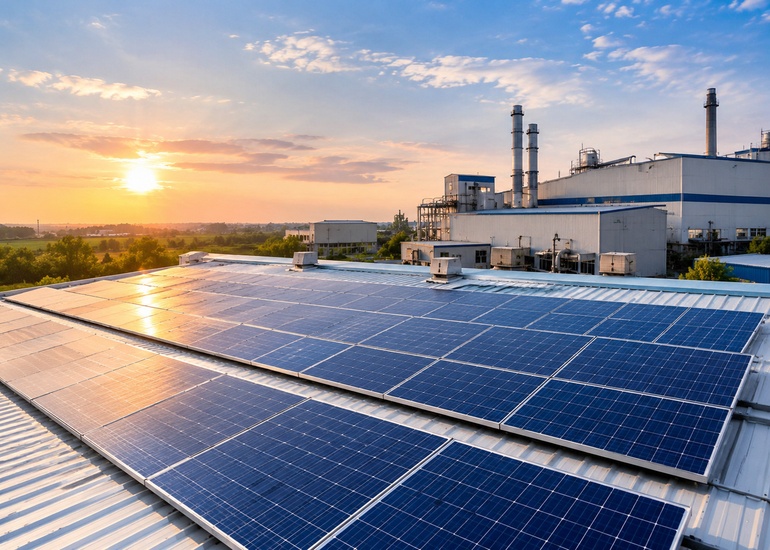
Industrial Solar Rooftop for Factories & Industrial Buildings in India: A Powerful Guide for Large Businesses
Electricity is one of the major operating expenses for factories and industrial buildings in India. With rising energy requirements, businesses are exploring practical ways to control costs while supporting sustainable operations. An industrial solar rooftop system offers an opportunity to generate electricity using unused roof space and reduce dependence on conventional power sources. From manufacturing units and warehouses to processing plants, rooftop solar can support facilities with substantial daytime energy consumption. However, selecting the right system requires careful planning, including an assessment of electricity usage, roof strength, available space, and installation costs. Solar India helps businesses explore solar energy solutions suited to their requirements. This guide explains how industrial rooftop solar works, its benefits, important installation considerations, and the factors large businesses should evaluate before investing in a solar power system.
1. What Is an Industrial Solar Rooftop System?
An industrial solar rooftop system uses photovoltaic (PV) panels installed on the roof of a factory or commercial industrial building to convert sunlight into electricity.
The generated power can support machinery, lighting, ventilation, office equipment, and other electrical loads. Depending on the system design, businesses can use grid-connected solar, battery-supported systems, or suitable hybrid configurations.
The main components typically include:
• Solar panels: Convert sunlight into direct current (DC) electricity.
• Inverters: Convert DC electricity into alternating current (AC) for compatible equipment.
• Mounting structures: Secure panels to the roof.
• Protection and monitoring equipment: Help manage electrical safety and system performance.
A properly designed installation considers the facility's energy consumption and operational requirements.
2. Benefits of Industrial Solar Rooftop for Factories
Industrial solar rooftop installations can provide several long-term advantages for large businesses.
Lower Electricity Expenses
Factories operating during daylight hours can use solar-generated electricity to meet a portion of their daytime demand. This can reduce the amount of electricity purchased from the grid, depending on consumption patterns and system capacity.
Better Use of Available Roof Space
Large industrial buildings often have extensive rooftops that remain unused. Installing solar panels allows businesses to utilise this space without requiring additional land.
Improved Energy Planning
Generating part of the facility's electricity on-site can help businesses manage energy expenses more effectively. Actual savings depend on system size, tariffs, generation, and applicable regulations.
Support for Sustainability Goals
Solar power can help businesses reduce reliance on conventional grid electricity and contribute to their environmental objectives.
3. How to Choose the Right Rooftop Sola Capacity
Selecting the appropriate capacity is essential for balancing investment costs and electricity generation. A system that is too small may not meet the intended energy needs, while an oversized installation may increase upfront costs without providing proportional benefits.
Before deciding on capacity, businesses should assess:
1. Monthly electricity consumption: Review recent electricity bills and load profiles.
2. Available roof area: Identify usable space after accounting for access pathways and obstructions.
3. Roof condition: Check structural strength, waterproofing, and expected roof life.
4. Daytime energy demand: Match solar generation with operating schedules.
5. Electrical infrastructure: Evaluate connections, protection systems, and grid requirements.
For example, a factory operating several production lines during daylight may benefit from a different system configuration than a warehouse with intermittent electricity demand.
4. Important Factors Before Industrial Solar Installation
Installing solar panels on an industrial building involves more than choosing equipment. A detailed site assessment helps reduce installation risks and supports reliable operation.
| Factor | Why It Matters |
|---|---|
| Roof structure | Determines whether the building can safely support the installation |
| Shading | Affects solar generation |
| Panel orientation | Influences the amount of sunlight received |
| Electrical connection | Determines integration requirements |
| Maintenance access | Supports cleaning, inspection, and repairs |
| Safety measures | Help protect workers and electrical equipment |
Businesses should also review applicable electricity regulations, approvals, grid connectivity requirements, and export or net-metering provisions with the relevant authorities and distribution company.
5. Understanding Industrial Solar Costs and Savings
The cost of an industrial rooftop solar system depends on its capacity, panel and inverter specifications, mounting arrangements, roof complexity, electrical upgrades, and installation requirements.
Instead of comparing quotations on price alone, businesses should examine the complete project scope, warranties, expected generation, maintenance arrangements, and estimated payback period.
A practical financial assessment should consider:
• Initial installation investment.
• Expected annual electricity generation.
• Electricity tariffs and applicable billing arrangements.
• Operation and maintenance expenses.
• Equipment replacement and financing costs, where relevant.
Savings estimates should be based on actual site conditions rather than generic promises. Industrial projects should also verify whether any incentives or tax benefits apply to their business and installation.
6. Why Consider Solar India for Industrial Solar Solutions?
Choosing a suitable solar provider can make the planning and installation process easier. Solar India helps businesses explore solar energy options according to their site requirements and electricity needs.
When evaluating a provider, look for support with site assessment, system design, equipment selection, installation planning, safety compliance, and post-installation maintenance.
A reliable project proposal should clearly explain the recommended capacity, estimated generation, equipment specifications, project timeline, warranty terms, and expected financial benefits. These details allow business owners to compare options and make informed investment decisions.
7. Industrial Solar Rooftop Maintenance and Performance
Regular maintenance helps keep a rooftop solar system operating effectively. Dust accumulation, loose connections, shading, and equipment faults can affect performance if left unaddressed.
Businesses should establish a maintenance schedule that includes:
• Cleaning panels according to local dust and weather conditions.
• Monitoring generation and identifying unusual drops.
• Inspecting cables, mounting structures, and electrical connections.
• Checking inverter performance and protection equipment.
• Arranging periodic inspections by qualified technicians.
Maintenance planning is particularly important for factories where rooftop access, production schedules, and workplace safety must be coordinated.
Conclusion
An industrial solar rooftop system can help factories and industrial buildings in India make better use of roof space, reduce grid electricity consumption, and support long-term energy planning. The best results come from selecting the right capacity, assessing roof conditions, understanding project costs, and ensuring professional installation and maintenance. Solar India can help businesses explore suitable solar solutions based on their operational requirements.
Planning a solar project for your factory? Contact Solar India to discuss your energy requirements, assess rooftop suitability, and explore an industrial solar installation designed around your business needs.
Frequently Asked Questions
1. What is an industrial solar rooftop system?
It is a solar power installation fitted on the roof of a factory or industrial building. It generates electricity from sunlight to support machinery, lighting, and other facility operations.
2. Can rooftop solar reduce electricity bills for factories?
Yes. Businesses can reduce grid electricity consumption by using solar-generated power during operating hours. Actual savings depend on system capacity, energy demand, electricity tariffs, and applicable billing regulations.
3. How much rooftop space is required for industrial solar?
The required area depends on the proposed system capacity, panel efficiency, roof layout, shading, and access requirements. A site assessment helps determine how much usable space is available.
4. Does an industrial rooftop solar system require regular maintenance?
Yes. Periodic panel cleaning, performance monitoring, electrical inspections, and inverter checks help maintain safe and efficient operation. Maintenance frequency depends on local environmental conditions and equipment requirements.
5. How can a business calculate the payback period of industrial solar?
Businesses should compare the initial investment with estimated annual savings after accounting for operating costs, financing, and applicable charges. A realistic assessment uses site-specific generation estimates and current electricity tariffs.