
Net Metering Explained: How Solar Users Earn from Electricity in Delhi
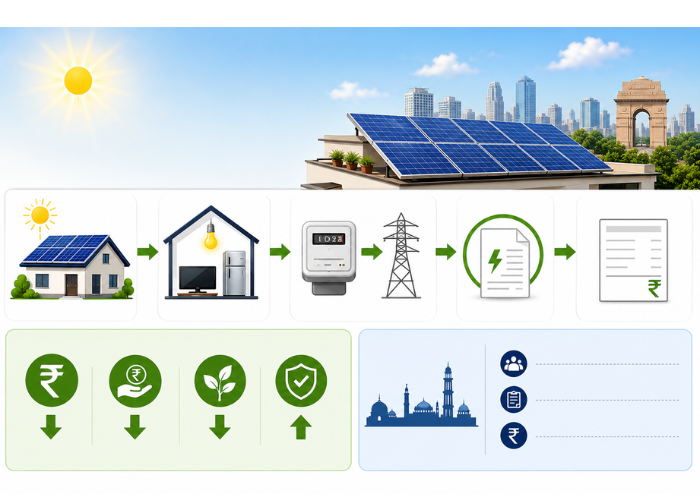
Net metering is a billing arrangement that allows individuals with solar panels to earn credit for the excess electricity they produce. In case your solar system generates more electricity than you consume in your home, the excess electricity is sold to the grid. Your electricity meter, in turn, captures this export, and charges you accordingly.
You simply pay for what you actually consume of the net electricity after taking off what your solar system returns.
Working of Net Metering
A two-way meter is fitted on your property. This is a meter that follows both:
• The power that you are using on the grid.
• Export of electricity to the grid.
Solar panels during the day can tend to produce more power than is required. The surplus is sold to the grid. You are powered at night or during cloudy days by the grid. The difference is computed at the end of the billing cycle.
In case you export more than you consume, the excess can be carried forward as credits, subject to policy rules.
Net Metering Policy in Delhi
Delhi follows guidelines set by the Delhi Electricity Regulatory Commission (DERC). In residential use, rooftop solar systems can be installed and net metering applied by residential users via their DISCOM (such as BSES or Tata Power Delhi Distribution).
Some key points:
• The systems are typically permitted to a load limit of the approved property load.
• Installation of a net meter is compulsory.
• The monthly billing is adjusted according to the exported and consumed units.
• This policy has rendered the adoption of solar more appealing in the city.
The advantages of Net Metering.
Lower Electricity Bills
Through solar energy and exporting additional power, households will be able to save a substantial amount on their monthly bills.
Faster Return on Investment
Net metering enhances savings, which are crucial in recovering the cost of solar set-up in a shorter time.
Eco-Friendly Energy Use
It promotes the consumption of clean and renewable energy and decreases reliance on fossil fuels.
Energy Independence
You are not so dependent on grid electricity, particularly during peak periods.
Who can use Net Metering?
Net metering can be applied to:
• Residential homes
• Group housing societies
• Commercial buildings
You can apply as long as you have room to install solar panels and permission to install them from your local DISCOM.
Things to Know
Prior to installing a solar system:
• Check your sanctioned load limit.
• Make sure that it is properly documented to be approved.
• Learn about billing periods and credit policies.
• Select the appropriate size of your system depending on your use.
• An effective system is well planned and will yield optimum savings and efficiency.
Final Thoughts
One of the largest factors that make rooftop solar in Delhi increase is net metering. Not only does it save electricity costs, but it also enables users to gain value out of the unused solar power. In the presence of favourable policies and the escalating electricity prices, a conversion to solar power has become a clever long-term solution.
For individuals in need of guidance on making informed decisions about solar energy and net metering, Solar India provides information and support.