
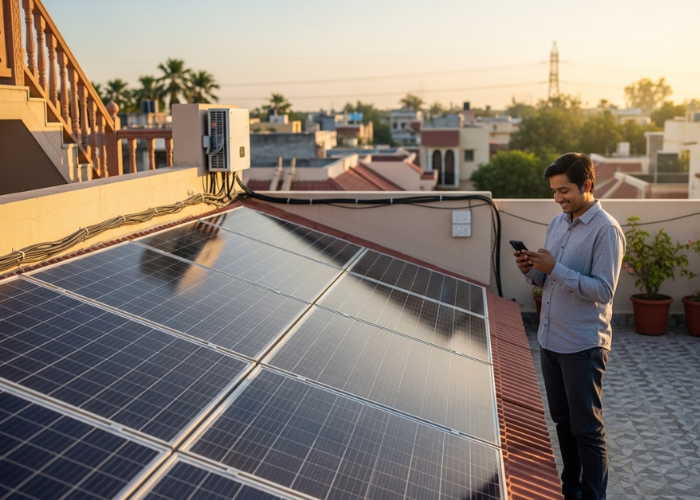
How Solar Energy Works: A Complete Beginner’s Guide for Homeowners in India
Growing electricity bills and power failure in most areas of India are making solar power a viable option among homeowners. In most parts of India, the country has a yearly average of 300 sunny days which makes it one of the most suitable countries in the world to utilize sunlight. Nonetheless, what about solar power? How does it work? We shall deconstruct it into simple terms.
What Is Solar Energy?
Solar power is energy which is supplied by the sun. The sun sends sunlight to the Earth every day in the form of small energy particles known as photons. These photons have energy that can be harnessed and used to produce usable electricity in homes.
This technology is referred to as a solar power system that incorporates solar panels, an inverter, mounting structures, and wiring.
What is the Process of electric generation by solar panels?
A solar panel installation is the most visible installation of any rooftop system. The photovoltaic (PV) cells form solar panels. These cells are generally fabricated of silicon which is a substance that reacts with the availability of sunlight.
The following is the step by step process:
1. The photovoltaic cells are exposed to the sunlight.
2. The sunlight is absorbed by the cells and forms direct current (DC) electricity.
3. This direct current power is supplied to an inverter.
4. The inverter changes DC to alternating current (AC) which is the form of electricity consumed by Indian households.
5. The converted electricity can be used to light up the lights, fans, air conditioners and other appliances.
What becomes of Superfluous Electricity?
Most of the grid-connected systems in India send any additional electricity produced during the day to the main power grid. This system is also referred to as net metering. On a dark or rainy cloudy day and your panels are not generating enough power, you pull power out of the grid as normal.
This balance will improve reliance on conventional sources of electricity and lessen monthly power bills.
Solar System Types
The residential solar installations are of three types mainly:
1. On-grid solar system: It is connected to the electricity grid; it does not have battery storage.
2. Off-grid solar system: It uses battery storage.
3. Hybrid solar system: This is a grid-connected solar system with a battery backup.
The on-grid systems are cost-effective and incur less maintenance as they are mostly preferred by the urban homeowners in India.
Why is solar energy viable in India?
The climate in India presents good solar prospects particularly in such states as Rajasthan, Gujarat, Maharashtra, and Tamil Nadu. In most states, the government is also promoting renewable energy by subsidizing and using a net metering policy.
A rooftop solar system is a long-term investment because a well designed system will last 25 years or more. The cost might appear to be high at the front end but in most cases the savings in the long run would be higher than the initial cost.
Conclusion
The solar energy mechanism would enable homeowners to make sound choices on whether to switch to cleaner power. The process is not complicated but strong, and it includes the sunlight to photovoltaic cells and electricity as it is used in your home. In case solar power system users want to know more about their system, or need help with servicing it, one can refer to such companies as Solar India which offer technical services and support to make sure that systems remain efficient and useful in the years to come.