
How Long Do Solar Panels Last? Lifespan, Warranty & Maintenance Guide
Solar power has emerged as one of the surest methods of producing clean energy. However, the question that most frequently arises among homeowners and businesses is: what is the life of solar panels? Knowledge on the lifespan of the solar panels, warranty and maintenance requirements are issues that can guide you to make appropriate choices before investing.
How long does the Solar Panel last on average?
The lifespan of most current-day solar panels is 25 to 30 years. This does not imply that they stop working after that. Otherwise, their productivity declines with time. Individual solar panels lose an average of 0.5 percent to 0.8 percent of their total productivity annually.
To illustrate, when a panel has an initial 100% efficiency, it can still be efficient at about 80-85% after 25 years. There are some good quality systems which do not end up electricity production even after 35-40 years when well taken care of.
The panel durability is influenced by the manufacturing quality, environmental conditions and the installation standards. Extreme temperatures, severe snow, high wind velocities and dust may influence long-term performance.
Knowledge on Solar Panel Warranty
The solar panel warranty is most often divided into two sections:
1. Warranty on goods produced - Includes manufacturing faults. This normally takes between 10 and 25 years.
2. Performance Warranty - The panels will be guaranteed to produce a particular level of output (usually in the 80-85 range) after 25 years.
One should read the terms of warranty seriously. There are those warranties that are linear such as those taking a performance decrease gradually within a given assured limit and others can have step-down performance guarantees.
Remember that in most cases, warranties cannot be used without appropriate installation and proper maintenance.
What are the effects on the performance of solar panels over time?
The performance of solar panels in the long term depends on a number of factors:
1. Weather conditions: The high temperature of the weather may cause efficiency to decrease a bit.
2. Dust and debris: Built up dirt prevents the sunshine and reduces energy production.
3. Shading: Trees, existing structures or new constructions can decrease the amount of sunshine.
4. Lifespan of inverter: Although panels have a lifespan of 25-30 years, inverters usually require replacement in 10-15 years.
Frequent checks will assist in the detection of small problems before they develop into large problems.
How to maintain Solar Panels?
The positive aspect is that the maintenance of solar panels is not a difficult task. There are no moving parts in the panels and this minimizes wear and tear. Nevertheless, fundamental treatment is necessary:
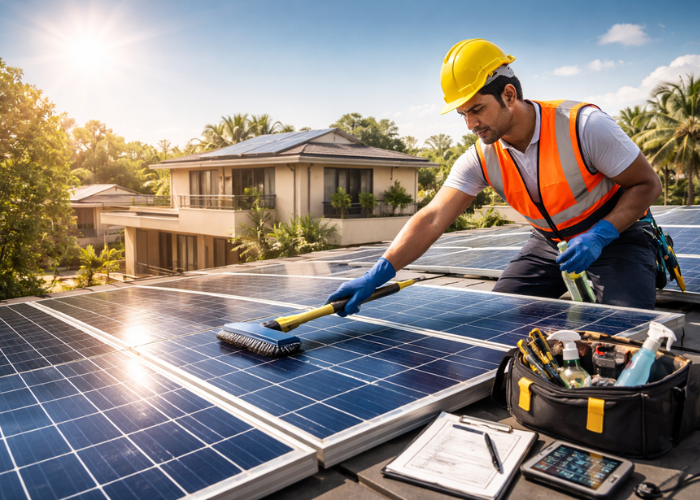
1. Clean the panels regularly to get rid of dust, bird droppings or leaves.
2. Check the wiring and structure mounting after every year.
3. Record the energy production to notice any immediate decrease in the production.
4. Arrange professional examinations after every few years.
5. Good maintenance would guarantee continuous energy supply and secure your long term investment.
Conclusion
Solar panels are constructed to last long hence many can provide stable electricity for up to a number of decades. Although the degradation of products is natural, the correct installation, routine maintenance and knowledge of your warranty cover can help a product to have a very long life.
To ensure that your solar equipment serves you successfully over the years, Solar India is offering technical support and maintenance services to support professional servicing and expert advice on how to maintain and properly maintain your solar systems.