
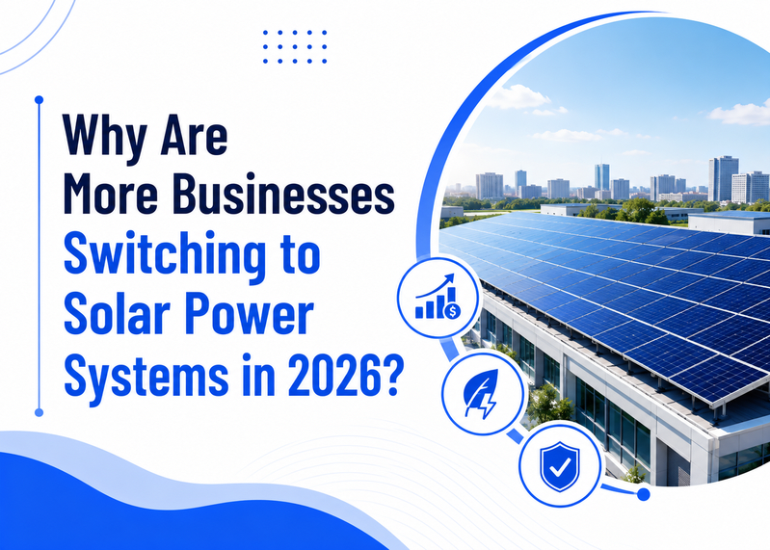
Why Are More Businesses Switching to Solar Power Systems in 2026?
Companies in the global arena are transforming their energy consumption patterns. There is a single evident trend in 2026: more companies are shifting towards solar power systems. This change is not immediate. Over the years, it has been accumulating and growing in size due to rising electricity prices, environmental concerns, and technological advancements.
One of the key factors is the rising Cost of Electricity.
The constant rise in electricity prices is one of the major reasons businesses are switching to solar energy. Conventional power generation sources are becoming increasingly expensive due to fuel prices and supply. Solar energy, however, provides a more reliable and predictable cost of energy. When an installed system is in place, the cost of producing electricity decreases considerably, helping businesses save in the long run.
The Solar Technology has become more efficient.
The solar panels that are in use today are much more efficient than they were ten years ago. Modern systems can produce more power despite the limited amount of sunlight. This is an enhancement that allows businesses to install panels without requiring large areas. Even rooftops can generate just enough to meet everyday needs. Improved battery storage has also enabled the storage of additional energy for later use.
Incentives and Government Policies.
Governments of most countries are pushing businesses to use renewable energy. Solar systems are becoming more affordable, thanks to tax breaks, subsidies, and a more relaxed lending climate. These policies lower the startup costs of investment, which means that small and medium-sized businesses can easily make the switch.
Environmental Responsibility Matters
Consumers are now more conscious of environmental issues. It is projected that businesses will minimise their carbon footprint and act responsibly. Solar energy is clean and renewable energy source that can reduce greenhouse gas emissions. Switching to solar will allow companies to demonstrate their sustainability and develop their positive brand image.
Independence and Reliability of Energy.
Business operations can be affected by power outages and supply disruptions. When solar systems are used, particularly with battery storage, they are more energy independent. Businesses can continue operating during grid outages, which is particularly significant for those that need to run at all times.
Long-Term Investment Benefits
The initial cost of installing a solar power system may seem high, but it is a long-term investment. The most common systems have a lifespan of 20-25 years and require little maintenance. In the long run, the savings on electricity bills can often outweigh the cost of installation, making it a very financially intelligent choice.
Conclusion
Economic and environmental factors have caused the transition towards solar power in 2026. Businesses are seeking methods to reduce expenses, enhance reliability, and have a smaller impact on the environment. Solar energy is a viable means of achieving all these requirements.
As more businesses seek cleaner energy sources, organisations such as Solar India are part of this emerging wave, helping businesses move towards a more sustainable future.